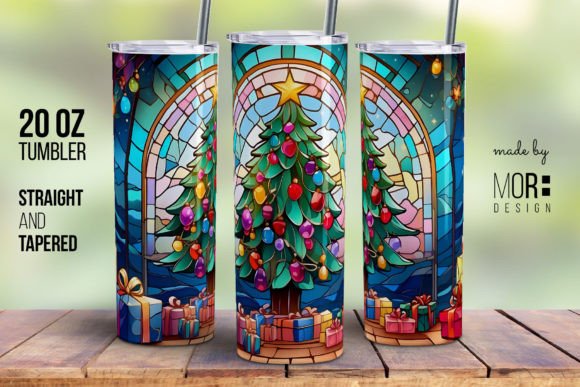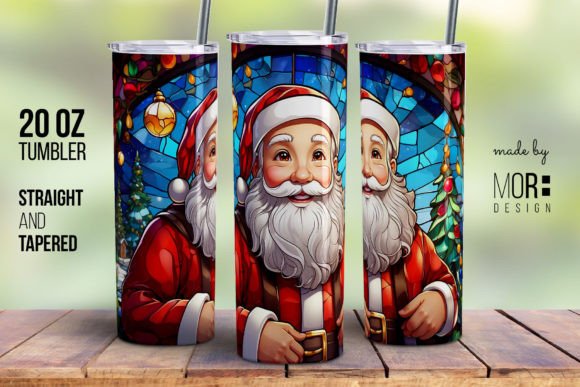
Stained Glass Santa Tumbler Wrap Guide
The holiday season brings a unique demand for personalized goods, and few items capture the festive spirit quite like a custom-decorated travel mug. Among the trending designs this year, the Stained Glass Santa Tumbler Wrap stands out for its intricate detail and vibrant color potential. This design style mimics the look of traditional church windows, using bold black leading lines to separate rich, jewel-toned sections of red, green, gold, and blue. When applied to a 20oz skinny tumbler, the effect is striking, transforming a standard stainless steel vessel into a piece of portable holiday art.
For creators, designers, and small business owners, understanding the nuances of this specific wrap is essential. It is not merely about printing an image; it is about mastering the alignment, the substrate preparation, and the creative adaptation of a digital file into a physical product that delights customers. Whether you are a hobbyist looking to make gifts for family or an entrepreneur scaling up your sublimation shop, the approach to a stained glass design requires precision and a keen eye for detail.
Understanding the Design Aesthetic
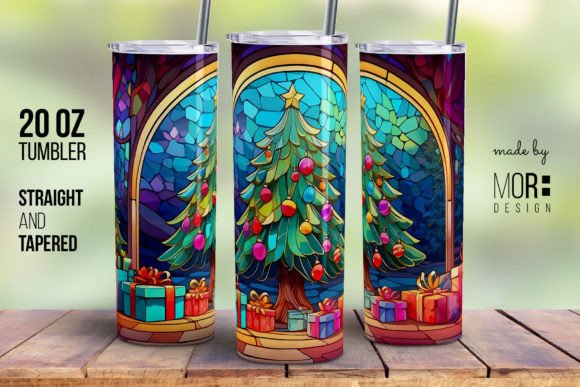
The appeal of the stained glass aesthetic lies in its contrast. The deep, opaque blacks of the "lead" lines provide a sharp framework that allows the translucent colors of the sublimation ink to pop. In the context of a Santa Claus theme, this technique elevates a common subject matter. Instead of a flat illustration, Santa's coat, the snowy background, and the holly leaves gain depth and texture. The design typically features Santa framed within an arch or a geometric pattern, reminiscent of cathedral windows.
When working with a Santa tumbler wrap Christmas tumbler wrap file, you will often receive both straight and tapered versions. This distinction is critical. A straight wrap is designed for tumblers with uniform diameter from top to bottom, while a tapered wrap accounts for the slight narrowing found in many popular 20oz skinny tumblers. Using the correct template ensures that the intricate stained glass lines do not distort or break apart during the heating process. The dimensions, often around 9.5 x 8.3 inches, are approximate starting points. A professional touch involves adjusting these dimensions slightly to match the specific circumference of the blank you are using, ensuring a seamless overlap without cutting through key design elements like Santa's face or the border details.
Creative Applications and Variations
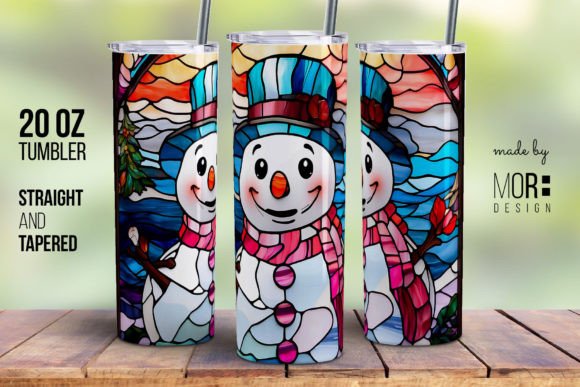
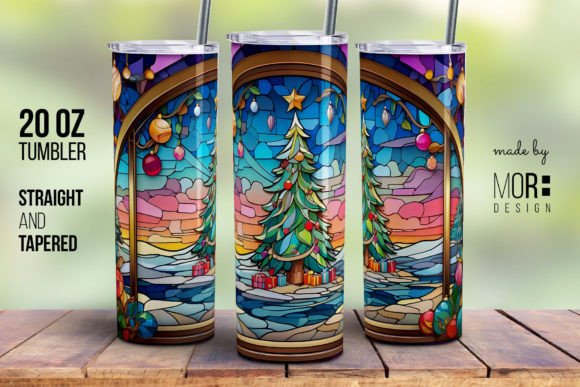
While the classic red and green palette is iconic, there is significant room for creative interpretation. One effective strategy for standing out in a crowded market is to offer color variations of the same Stained Glass Santa Tumbler Wrap. Consider creating a "Winter Night" version where the background shifts to deep blues and purples, making the gold and red elements glow like lights in the dark. Alternatively, a monochromatic scheme using varying shades of blue and silver can appeal to customers who prefer a cooler, more modern winter aesthetic over traditional Christmas colors.
Beyond color swapping, think about how the design interacts with the tumbler itself. The 3D sublimation design files available today often come with inflated or pre-distorted maps to help with the curvature. However, you can enhance the final product by pairing the wrap with specific tumbler finishes. A glossy white tumbler provides the truest color representation, essential for the jewel-tone effect of stained glass. Conversely, applying this design over a metallic silver or gold blank can add an extra layer of shimmer to the lighter sections of the image, mimicking the way light hits real glass.
For those targeting specific niches, customization is key. You might adapt the design to include a monogram in the center of the stained glass pattern or add a name banner at the bottom that looks like a plaque on the window frame. This turns a generic holiday item into a cherished keepsake. Educators and community leaders might use these wraps for fundraising events, offering different house colors or organizational logos integrated into the stained glass borders.
Technical Execution for Professional Results
Executing a complex design like this requires more than just a printer and a heat press. The quality of the transfer depends heavily on the preparation. When handling a 20 Oz Skinny Tumbler Template, always print a test strip to verify the circumference fit. Because stained glass designs rely on continuous lines, even a millimeter of misalignment can be noticeable where the seam meets. Position the seam in a less conspicuous area of the design, such as within a solid color block or along a vertical lead line, rather than across Santa's face.
Sublimation settings must be precise. Over-pressing can cause the blacks to bleed, muddying the crisp lines that define the stained glass look. Under-pressing may result in dull colors that lack the necessary vibrancy. Follow the manufacturer's guidelines for your specific ink and paper combination, but be prepared to tweak the time and temperature based on your environment. Using high-quality shrink wrap or convection ovens for 3D tumblers ensures even pressure around the curve, which is vital for maintaining the geometric integrity of the window pane effect.
Organization is another pillar of success. If you are producing these in batches, keep your digital files clearly labeled. Distinguish between the straight tumbler wrap and the tapered tumbler wrap versions to avoid costly mistakes. Maintain a checklist for each order that includes the tumbler type, color variant, and any personalization requests. This systematic approach reduces errors and ensures consistency, which is crucial for building a reputation as a reliable creator.
Maximizing Market Reach
The audience for holiday tumblers is broad, ranging from corporate clients seeking employee gifts to individuals wanting unique stocking stuffers. To reach these groups effectively, showcase the versatility of the Stained Glass Santa Tumbler Wrap. Create content that demonstrates the durability of the design—show how it withstands dishwashing (hand wash recommended for longevity) and daily use. Highlight the tactile quality of the finish; although sublimation is smooth, the visual depth gives an impression of texture.
Marketing these items works best when you tell a story. Frame the product not just as a cup, but as a moment of warmth during a cold commute or a cozy accessory for sipping hot cocoa by the fire. Use photography that captures the light reflecting off the "glass" panes of the design. For bloggers and influencers, this provides excellent visual content that drives engagement. Small business owners can bundle these tumblers with matching coasters or gift boxes, increasing the perceived value and average order size.
Ultimately, the success of a holiday product line depends on the balance between artistic vision and practical execution. The stained glass trend offers a perfect intersection of nostalgia and modern customization. By paying attention to the technical details of the wrap, experimenting with color palettes, and understanding the needs of your specific audience, you can create products that resonate deeply. Whether you are downloading a single PNG for a family gift or managing a large inventory of digital downloads for other makers, the principles remain the same: clarity, consistency, and creativity.
As you move forward with your projects, remember that the tools you use, such as the skinny tumbler Christmas templates, are just the foundation. The value you add comes from how you manipulate, present, and deliver the final item. Keep your workspace organized, stay updated on sublimation techniques, and never stop experimenting with new ways to interpret classic themes. The holiday market is competitive, but there is always room for high-quality, thoughtfully designed goods that bring joy to the end user.